The Founder Mindset
Achilles, tattoos, and commitment

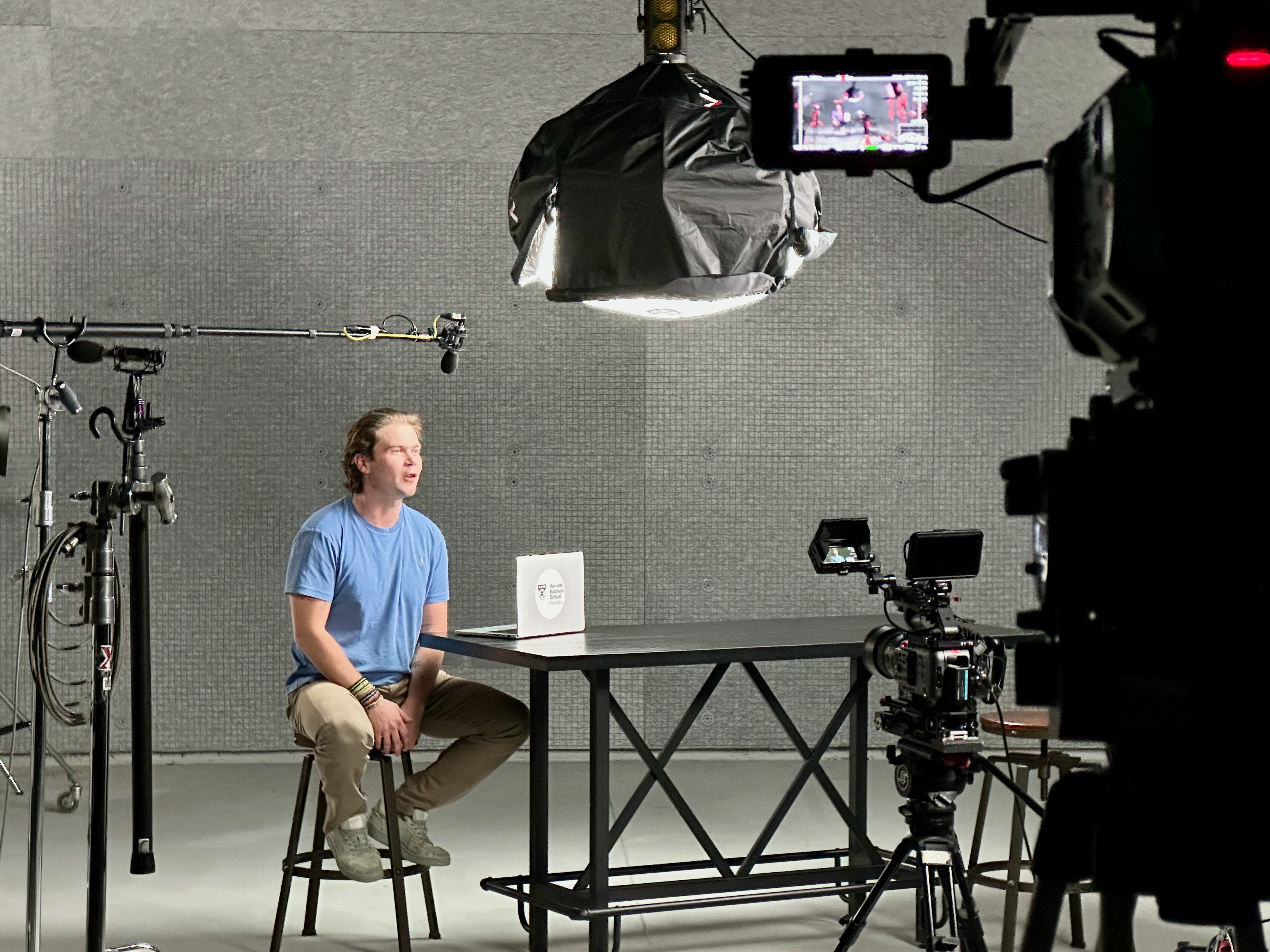
Earlier this week I was kindly asked by my Harvard Business School professor, Reza Satchu, to record a few reflections on what the ‘Founder Mindset’ means to me as part of his podcast series.
This was a forcing function for me to reflect on the early stages of my founding journey.
I started my first business when I was 16. It failed. I ran my second business when I was at University - it was a great success, but maybe that wasn’t hard - since I was selling nightclub tickets and alcohol to students…
I tried to start another business before I graduated from Oxford. It was shut down before it got started by the University. I decided that I wanted to graduate with a degree rather than launch it.
My fourth startup was for someone else - I launched Edinburgh Cycle Hire - it was the toughest and most rewarding thing that I have done. My fifth attempt at founding on my own was with my undergrad professor - that one didn’t work either, but I learnt a lot about the challenges of tech transfer from universities in the UK…
My sixth was a venture called Dave with some amazing co-founders from my class at HBS - we set up, ran, and closed down a business in a matter of months. I learnt so much more in that process than I have in many parts of my career to date, but I fell out of love with the problem.
So, here I am on attempt number seven. I am about to incorporate Create Something Good to build the world’s first voice-powered memory platform: thragma. I am obsessed with the problem space, I am working on my own again, which is incredibly hard, and I have ambitions to build a multi-billion dollar business.
I give all this context because I think I have some reps on this founding malarkey, but I am a novice at building a company of venture-backable scale with global impact ambitions, and in a country where I have never lived. It is wonderfully exciting to be taking a swing at significant right-tail outcomes, with a healthy number of scars, but also the naivety and dogged obsession that you need to think that you are the one to do something like this.
So what does the ‘Founder Mindset’ mean to me?
It is the freedom to choose how you want to live your life, and the resilience you need to make the commitments and judgements required to deserve that freedom.
To take that bold step towards freedom, according to Professor Satchu, is much like The Hero’s Journey, and for me the Hero’s Journey is close to my heart - well more literally close to my veins.
It always reminds me of Achilles in the Iliad. Well, on a particularly bad day, I think of Brad Pitt in Troy! Achilles knew that his fate was to kill Hektor, but when that happened, his own days would be numbered. His mother Thetis speaks some very wise words to him once he has killed Hektor and knows that death will be coming his way soon:
“οὐ γάρ μοι δηρὸν βέῃ, ἀλλά τοι ἤδη
ἄγχι παρέστηκεν θάνατος καὶ μοῖρα κραταιή.”
The Greek can be translated as:
“For, I tell thee, thou shalt not thyself be long in life, but even now does death stand hard by you and heavy fate.”
This passage resonated with me when I first read it when I was 17, and it was why I applied to Oxford for Classics. Especially the idea of life being short and heavy fate always being pressed upon you. So much so that I have it tattooed on my right arm. I wrote my HBS application essay about it.
I look at this every day, because I feel like the hero in my own story. I know I have been given the opportunities to make a significant impact in the world, and it is my responsibility to push through the challenges and use my judgement to actualize that impact. I came to HBS to make my footprint on the world, and I believe that building a business that will outlast me is the footprint that I will leave after I am gone.
Reza’s class and his thinking on developing a better Founder Mindset has been integral in me growing the confidence to build the business that I am building - and understand the ‘heavy fate’ that sits with me.
The mindset is nice but it is all about commitment
The Founder Mindset is a great framework, but in many ways it can be boiled down to commitment.
Commitment to act with confidence beyond one’s capabilities. Commitment to show up everyday and keep pushing when the world is telling you ‘no’. Commitment to yourself to be the best you can. Commitment to your customers to build something they really want. Commitment to put yourself consistently in environments where you are exercising your judgement to maximize your learning.
Commitment is hard though.
Commitment is like compound interest.
It has exponential features but the gratification is delayed. This is what makes it so valuable and makes it so hard. I’ve never been particularly good at delayed gratification, but I know it is one of the key indicators of success in life. Ultimately an ability to continue doing something even when it is painful and doesn’t show any immediate reward.
This requires resilience and resilience is a muscle. A muscle that grows stronger through repetition and scar tissue.
I came to HBS, in part, to build greater resilience and to maximize my learning. I have found that a commitment to the founder journey is the fastest and most rewarding way to achieve those goals.
The Founder Mindset is just that - but it is also a way of being, a commitment to a lifestyle - that isn’t for everyone, but is certainly one for me.