Memory Memo vol. VIII
Ian McEwan’s ‘What We Can Know’

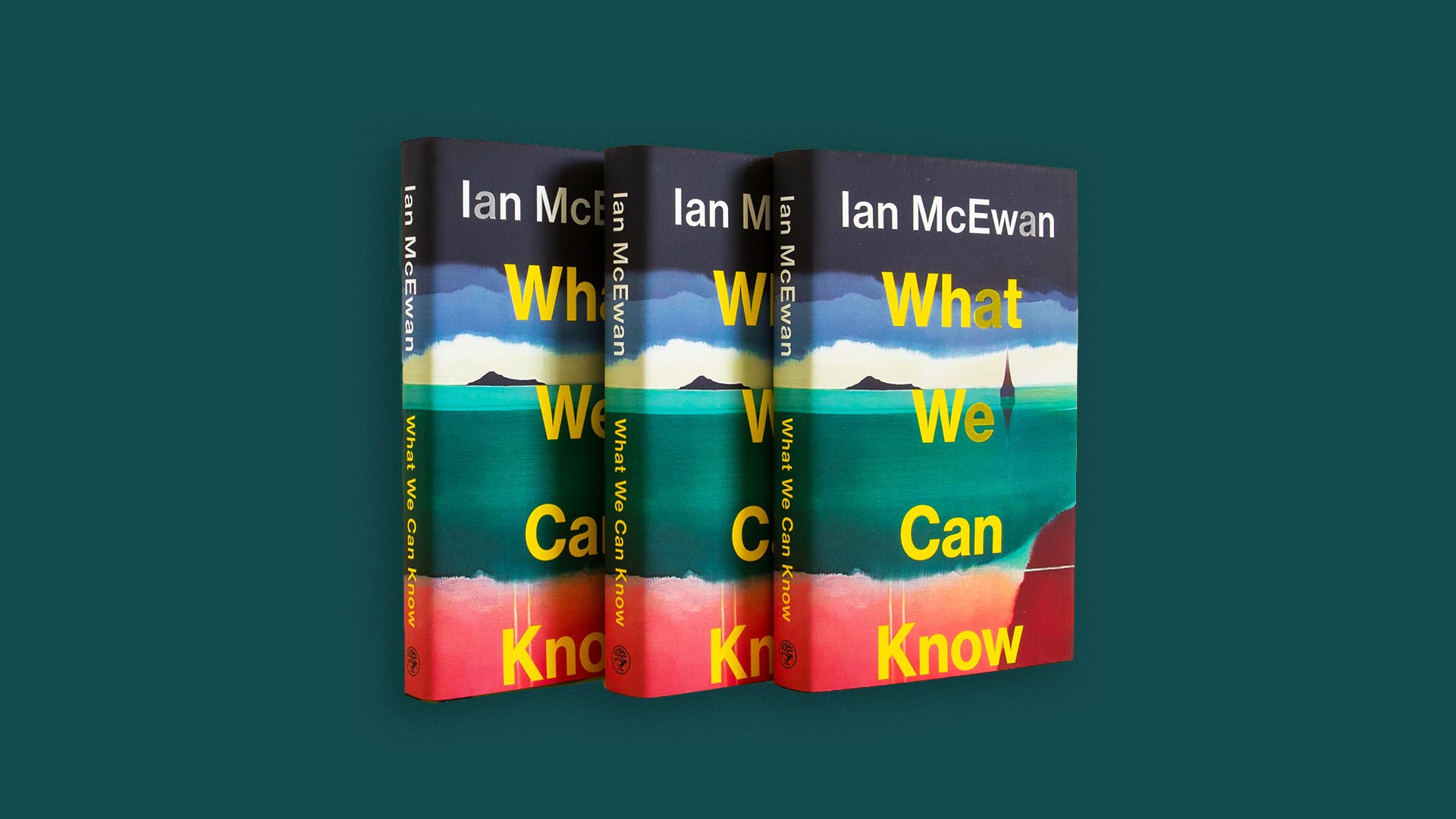
Memory is imbued in my surroundings now.
It is like when you spot a yellow Mini Cooper for the first time, then suddenly all you can see, everywhere, is yellow Mini Coopers. For me, I now see memory everywhere and in everything.
This week memory infiltrated my bedtime reading.
I have just finished reading Ian McEwan’s latest book. It is a piece of fiction that describes the search for a lost poem from a poet of the 2010s from the perspective of an academic in the 2100s. The book explores ideas about what we will leave behind from this digital age, the terrible effects of Alzheimer’s, and the difference between what we record and what we feel.
No plot spoilers here. Just some themes that connect to memory, thragma, and me.
Friction
There is a case for friction.
We are losing so much of ourselves, of the value of life through a desire for ever-increasing ease.
The perspective of the researcher from the 2100s unveils this issue.
“Email or text rarely carries as much interesting subjective reflection as a thoughtful nineteenth- or twentieth-century letter.”
This is part of the lacuna that thragma aims to fill, by creating a product that has friction built into it, and to generate value as well as aesthetic pleasure through that friction.
That is why I am working with Professor Michael Norton, who authored the now famous IKEA effect. We are trying to understand how we can create a process of reflection upon our memories that adds context to our photographs, a process that feels of value in and of itself, separate from the output.
I have felt value from a process in and of itself in the past year as I write a journal every day, and continue, stubbornly, to write handwritten letters to friends. The effectiveness of this communication channel may have lost its utility (admittedly, most of my letters are one-way channels!), but I find value in it. I have designed friction into my life, to extract more value from the rituals and habits that I have built - an architecture that frames my life to give me more pleasure.
In 2026, I expect us to experience much more designed friction in consumer products as we search for something different from the monotony of ever-increasing ease. I suspect this will be much like the shift to ‘handmade’ products we saw in reaction to the rise of outsourced mass manufacturing in China in previous decades.
A layer cake
One of the female characters in the book, Vivien, has a husband, Percy, who suffered from Alzheimer’s and was a violin maker. She describes how she had a physical memory of him embodied in a violin that he had made for her.
“As I held the violin in my hands, my good intentions began to collapse. The man who made this gorgeous instrument had vanished.”
The tragic reality of Alzheimer’s is that identity and personality disappear through the loss of memories. That is why I see the work of thragma as an essential infrastructure layer for our humanity - creating a new artifact that forms a consistent thread of the fragments held in our brain - layered over time.
A new infrastructure layer is required because the current fragments of the artifacts that we have don’t allow us to form a thread of identity and of experience. Vivien echoes this sentiment again when reflecting on her husband, Percy.
“It troubled her that she was no longer able to see Percy vividly from ‘the primary source of memory’. Over the years he had receded into the photographs she kept in a walnut box he made for her one Christmas.”
There were two tangible memories of Percy, the violin and a box filled with photographs. These tangible objects conjure memory very effectively, however, without the context of the ‘primary source’, a distance between the memory and the individual is created. With thragma we are building a product that layers your memories over time, so you can see how your perspective on a memory changes over your life - like track changes on a Word document. However, we recognize that tangibility plays a role for our memories - that is why we aim to use our ‘Digital Memories’ to inform ‘Physical Creations’ through personalized gifts like custom scents, vinyl records, or books.
Rituals
I am hoping to embed a new ritual, a new process of engaging with moments in our life as we live them. This is similar to journaling, which as noted by Vivien in McEwan’s novel, provides a different perspective on our purposefully selective memory.
“In addition, guilt and remorse are useful aids to memory. I use the journals mostly to remind myself of the sequence of events, on which memory is notoriously weak. The past, jumbled in the mind, survives in its own special tense, a form of ahistorical present. A journal, whatever its quality, fixes events like beads on a string.”
At thragma memory cards will create the beads on a string while maintaining the special tense of memory, the ahistorical present. The memory cards will combine photo, voice, and music over time and so are ‘living’ rather than fixed in a moment of the past. Although thragma is still pre-product, I have started to build rituals afresh on my own account.
On a recent trip to Florence, I sent photos of architectural details from Chiesa dei Santi Apostoli and Basilica di Santa Croce di Firenze to myself on WhatsApp with accompanying voice notes of my reflections. Listening back to the voice notes as I write this, I can hear connections that I have made between details in church architecture to places in the UK, people I care about, and things that I have done. These ‘living memory cards’ evoke so much more than my journal entries as I can sense, in my own voice, how I felt at the time while I can see the visage that I was looking at too. The ritual of reflecting changed the memory for me, and now I can add another voice note in my chat to start building a layer cake with this stack of memories.
Ian McEwan’s What We Can Know triggered lots of reflections for me - maybe, in part, because it is based in Oxford, with excruciatingly exact details of a world that I know very well. It made me joyous for the present at a time when I have plentiful friends and have experienced so many new things in 2025 allowing me to create countless new memories. It made me conscious that I should record these experiences, not least to help me reflect on how much joy, difficulty, or growth they have given me, but also for a time when my memory is not so good or even significantly affected like that of Percy in the book.
But more than anything it made me excited that in 2026 I might be able to create something good for the world - something of which the archaeologist and historian in me could be proud. A future student of our age might not be left with TikTok reels, GIFs on WhatsApp, and performative Instagram photos alone as the artifacts for the culture of our age - but with thragma reflective, meaningful, and rich ‘living memory cards’ in our voices, conjuring the culture of our experience today.