Memory Memo vol. VI
Smell, Taste, & Touch

Today, we have thousands of photos on our phones but we are losing the stories behind the moments that matter in our lives. We can capture the context for a photo using our voice - effectively conjuring the feeling, the ‘why’ behind the frame. However, there are other sensory prompts that we do not currently have an effective way of capturing.
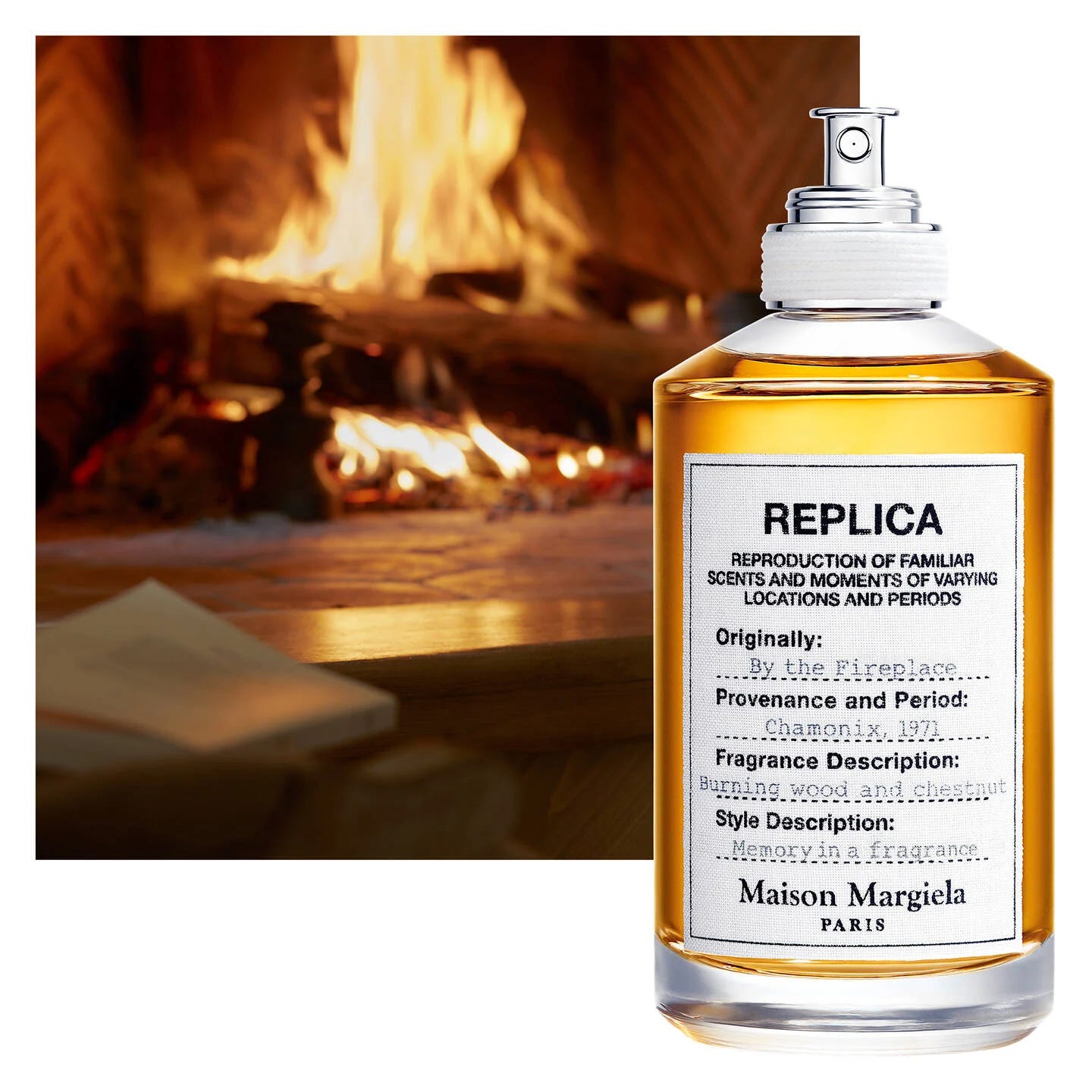
Smell can be a particularly visceral prompt for memory. For example, Maison Margiela’s ‘Replica’ scent line reproduces ‘familiar scents and moments of varying locations and periods’, such as ‘lazy Sunday morning’, ‘on a date’, ‘under the stars’, and ‘by the fireplace’.
The scents are designed to conjure specific places and times. It isn’t about what is in the bottle, but what the bottle lets you experience again and again. This echoes Proust’s famous ‘petit madeleine’; the power of smell to drive involuntary memory is especially acute.
I can imagine a product where photos can trigger custom scent production - so that a picture of lavender fields in Provence creates a custom scent or candle, enabling you to re-live that moment again and again.
Taste is often linked with other prompts for memory to conjure experiences; for example, “I like my coffee to taste like a memory from 2007” (Colin King).
Many people enjoy preserving their family recipes to pass down across generations. As more information about our memories is faithfully and easily preserved, products could emerge that enable us to relive experiences or enable us to connect and share taste experiences with others.
Touch can be important as a physical reminder of memories; people like to touch photo albums, letters, childhood teddy bears, blankets, or ornaments. “I believe how you feel is who you are [...] to me denim is the essence of nostalgia incarnate. It’s familiar, yet uniquely your own” (Gianna Harms)
All these sensory prompts show how memory is tangible for so many people - we like to be able to engage with memories in the physical world.
Better contextual preservation of our memories in the digital world will enable us to re-create memories in the physical world - whether that be through tangible products or through ‘third spaces’ where we can use memories to better connect with ourselves and those around us.